

When you first walk into a compressor room, you might notice that not all compressors look the same. Some stand tall and compact like a single tower. Others spread out horizontally, while a few are arranged in a “V” shape or an “L” configuration. This is not a design quirk. Just as cars come as sedans, SUVs, or hatchbacks to suit different needs, diaphragm compressors are built in various geometric layouts to balance space, performance, maintenance access, and vibration control. Understanding these shapes helps you choose the right compressor for your facility.
The Three Basic Layouts: Vertical, Horizontal, and Angle (V/L)
Diaphragm compressors, especially multi‑stage models, can be arranged in three common configurations:
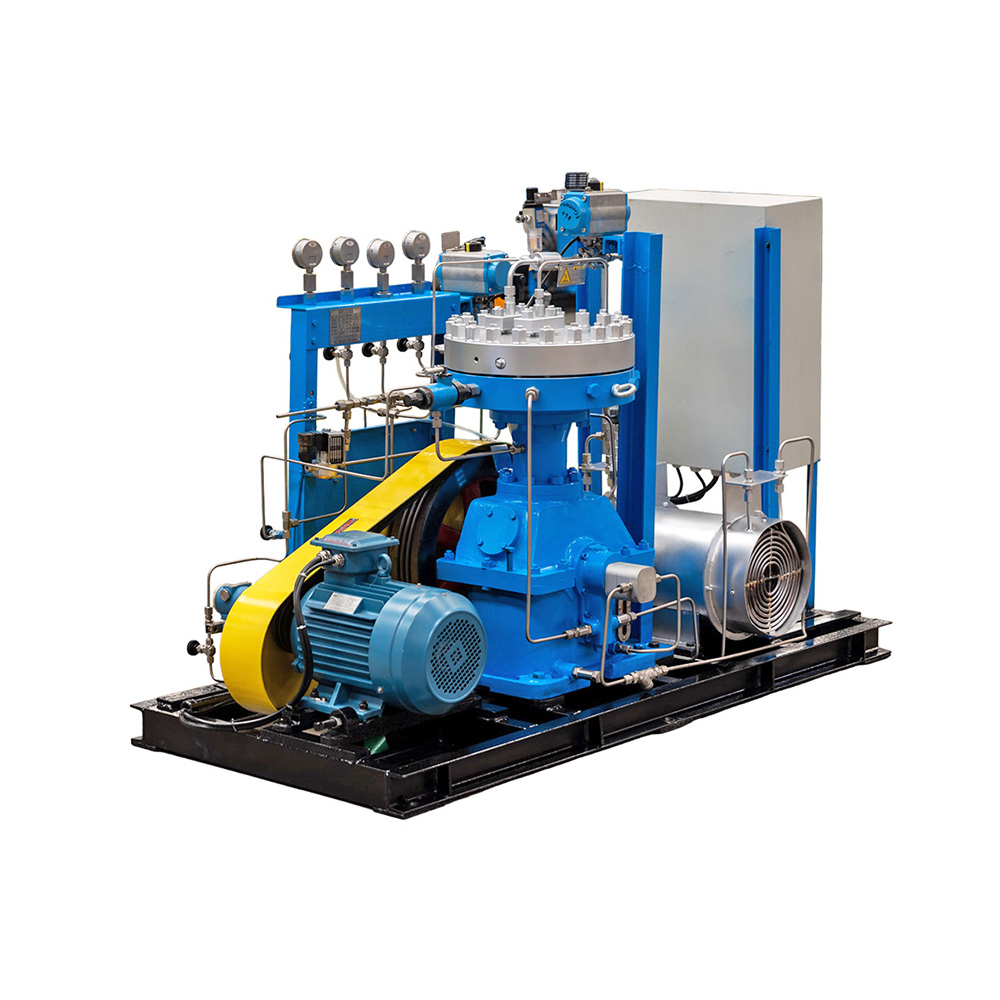
- Vertical: Cylinders are stacked one above the other.
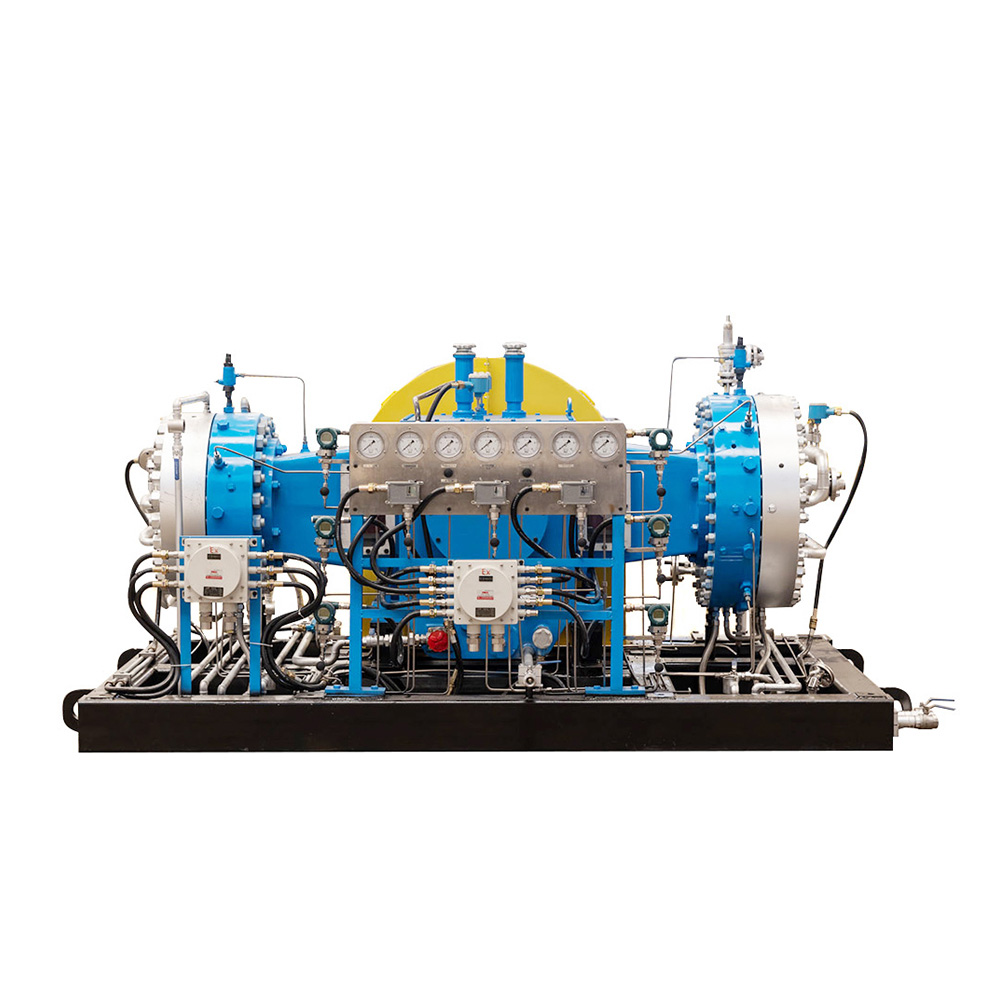
- Horizontal: Cylinders are placed side‑by‑side along a common crankshaft.
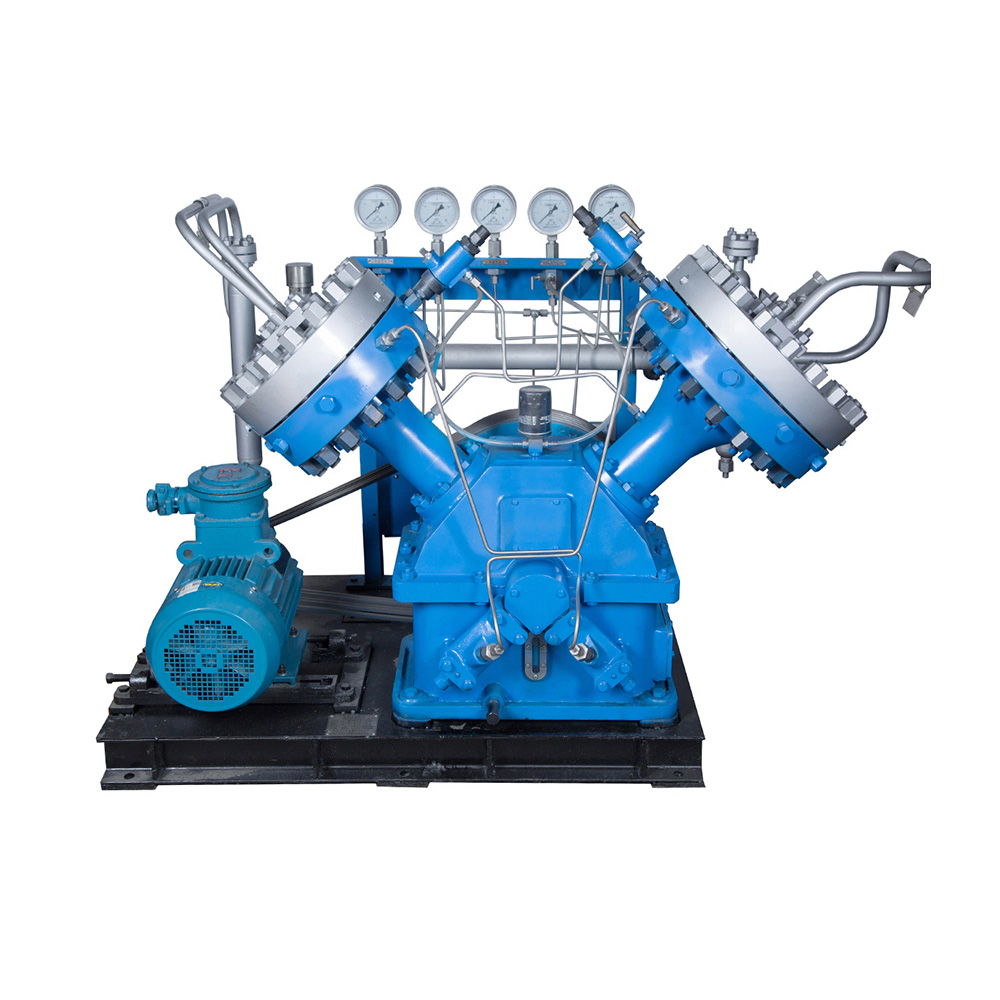
- Angle (V‑type, L‑type, W‑type): Cylinders are arranged at an angle (e.g., 60°, 90°) around the crankshaft, forming a V, L, or even a W shape when viewed from the end.
Each layout has its own strengths. The choice depends on your available floor space, required number of stages, maintenance philosophy, and vibration sensitivity.
Vertical Compressors – The Space Saver
In a vertical diaphragm compressor, the cylinder(s) stand upright. This design takes very little floor space because the machine grows upward rather than outward. It is ideal for crowded engine rooms, offshore platforms, or mobile applications where every square meter counts. The vertical arrangement also allows gravity to assist in draining any condensate that might form, which can be helpful for certain gases. However, accessing the top cylinder for maintenance may require a ladder or a small platform.
Horizontal Compressors – The Stability King
Horizontal compressors lay the cylinders flat. This layout provides a low center of gravity, excellent stability, and easy access to valves and cylinder heads from the side—technicians can stand on the floor without climbing. Horizontal machines are often chosen for larger, heavier multi‑stage compressors where vibration damping is important. They do, however, occupy more floor space than a vertical unit of the same capacity.
Angle (V and L) Compressors – The Best of Both Worlds
Angle‑type configurations are where the “V” and “L” shapes appear.
- V‑type: Two cylinders are set at an angle (typically 60° or 90°), forming a V when viewed from the end. This creates a compact, balanced design that reduces vibration and allows a shorter, stiffer crankshaft. V‑shaped compressors are widely used for medium to high‑power applications because they offer good mechanical balance and a smaller footprint than horizontal units.
- L‑type: One cylinder is vertical, the other horizontal, forming an L. This arrangement is common for two-stage compressors where the low-pressure cylinder (larger diameter) is placed vertically or horizontally, and the high-pressure cylinder (smaller diameter) is arranged at 90°. It provides good access to both stages and a natural separation of the hydraulic and gas sections.
Angle configurations are particularly popular for multi‑stage diaphragm compressors that need to achieve high pressures (e.g., 30–100 MPa) without becoming excessively long or tall. They balance the forces on the crankshaft, reduce vibration, and keep the overall machine compact.
Why Shape Matters: Performance, Access, and Vibration
Choosing the wrong layout can lead to problems:
- Vibration: Poorly balanced compressors can shake piping, loosen foundations, and create noise. V‑type and horizontally opposed designs inherently cancel some inertial forces.
- Maintenance: If the cylinder heads are hard to reach, routine valve inspections become difficult. Horizontal and L‑types offer better ground‑level access.
- Space constraints: A vertical unit may fit in a corner where a horizontal machine would block a walkway.
- Staging requirements: A three‑stage compressor might use a V‑V or V‑L arrangement to pack three cylinders into a compact frame.
The Car Analogy
Think of it like this:
- Vertical compressor = a two‑door city car. Small footprint, easy to park, but you have to stoop to get in the back.
- Horizontal compressor = a long station wagon. Lots of space, everything is easy to reach, but it needs a big garage.
- V‑type compressor = a sporty SUV. Balanced, powerful, fits in a normal parking space, and gives you good access to the engine.
Customisation: No “One Size Fits All”
Because every installation is different—some have high ceilings, others have wide open floors, some prioritize vibration isolation, and others need easy maintenance—a good compressor manufacturer offers multiple layouts. The ability to choose between vertical, horizontal, V, or L configurations is part of a truly customized solution.
Xuzhou Huayan Gas Equipment Co., Ltd.: Engineering the Right Shape for Your Space
With 40 years of dedicated experience in compressor design and manufacturing, Xuzhou Huayan understands that a compressor is not just a set of performance numbers. It is a machine that must live in your facility, be maintained by your team, and run reliably for years. That is why we offer vertical, horizontal, V‑type, and L‑type diaphragm compressors – and we help you select the configuration that best fits your space, your pressure requirements, and your maintenance practices.
Our Engineering Commitment to Smart Layouts:
- In‑House Design and Manufacturing Control: We design every frame, cylinder arrangement, and hydraulic system ourselves. This allows us to create vertical, horizontal, or angle configurations without compromising quality or reliability.
- Application‑Focused Engineering: We ask about your room dimensions, access restrictions, and vibration sensitivity before recommending a layout. A compressor that is perfect for a laboratory may be wrong for a containerized station.
- Proven Expertise in Multi‑Staging: Decades of building two‑stage, three‑stage, and even four‑stage diaphragm compressors have given us deep knowledge of how to arrange cylinders for optimal balance, cooling, and maintenance access.
- Customization for Your Needs: Do you need a compact vertical unit for a mobile biogas trailer? A stable horizontal machine for a factory floor? A V‑type for a high‑pressure hydrogen refueling station? We can deliver the shape that works for you.
- Focus on Long‑Term Reliability and Serviceability: A well‑shaped compressor is easier to maintain. We design our V and L configurations with service points within easy reach, reducing downtime and keeping your operations running.
Conclusion
The shape of a diaphragm compressor – whether vertical, horizontal, V, or L – is not a cosmetic choice. It is a functional decision that affects vibration, space usage, maintenance ease, and overall system integration. Just as you would choose a car that fits your garage and driving style, you should choose a compressor layout that fits your facility and operational needs.
With four decades of experience and a commitment to custom‑engineered solutions, Xuzhou Huayan offers the full range of diaphragm compressor configurations. We do not believe in “one size fits all.” Instead, we listen to your requirements and deliver a compressor that performs flawlessly—and fits perfectly.
Contact our engineering team to discuss the best layout for your diaphragm compressor application.
Xuzhou Huayan Gas Equipment Co., Ltd.
Email: Mail@huayanmail.com
Phone: +86 19351565170
Engineering the Right Fit for Over 40 Years.
Post time: Apr-03-2026